The Subtle Craft of Timing Cycles in Multi-Stage Accumulator Builds
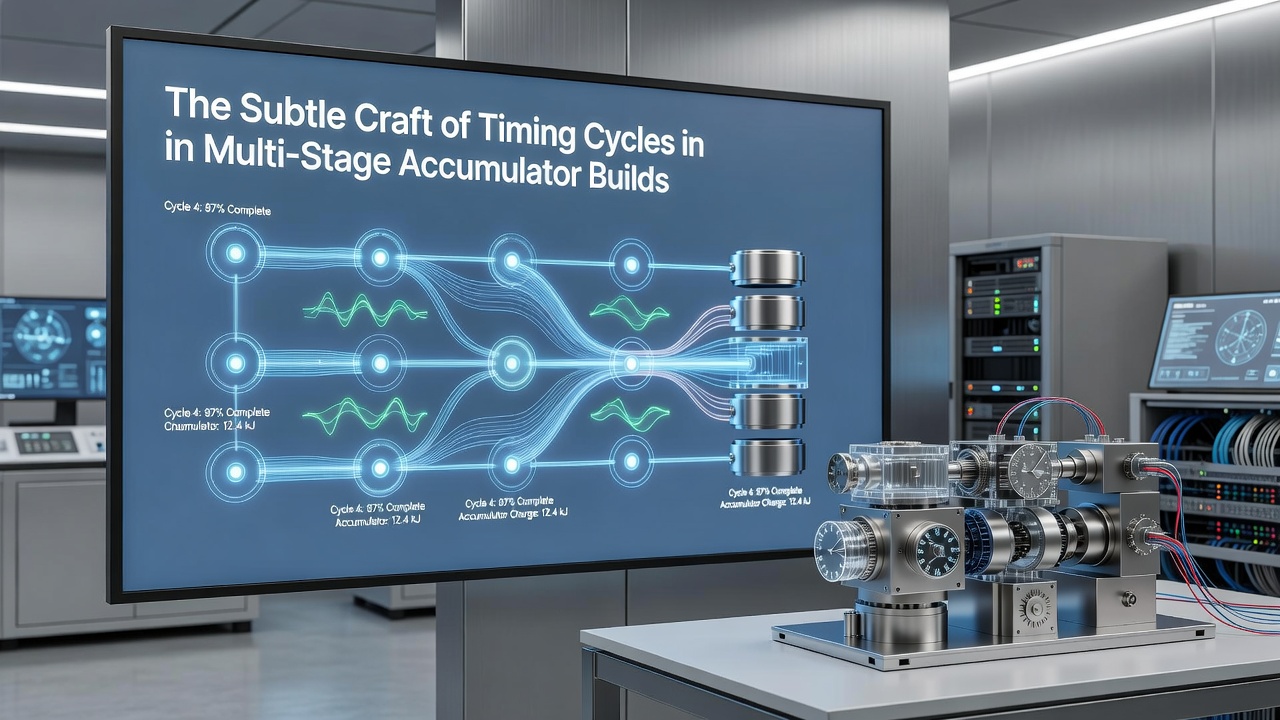
Multi-stage accumulator builds rely on precise timing cycles that coordinate energy storage and release across sequential phases in hydraulic and pneumatic systems; researchers at various institutions have documented how these cycles determine overall efficiency in manufacturing equipment and renewable energy storage setups. Engineers coordinate bladder, piston, and diaphragm accumulators through synchronized valve operations that prevent pressure spikes while maintaining consistent flow rates, and data from industrial monitoring programs shows that optimized timing reduces energy loss by measurable percentages in large-scale operations.
Core Principles Behind Accumulator Timing
Timing cycles in these builds involve pre-charge pressure adjustments followed by controlled charging intervals that align with downstream demand patterns; studies from the U.S. Department of Energy highlight how mismatched intervals lead to premature component wear in multi-stage configurations. Operators monitor temperature fluctuations and fluid viscosity changes that influence cycle duration, then adjust solenoid response times accordingly to keep the system within operational tolerances. One research team tracking performance across North American facilities found that intervals shorter than 2.3 seconds between stages improved response in high-load scenarios while longer pauses stabilized pressure in low-demand periods.
Implementation in Industrial Settings
Facilities in automotive assembly lines deploy multi-stage accumulator arrays where the first stage handles rapid pressure buildup and subsequent stages manage sustained delivery; Australian government reports on energy efficiency note that such sequencing supports continuous operation without frequent pump activation. Software algorithms calculate dwell times based on sensor inputs from pressure transducers and flow meters, allowing real-time recalibration during production shifts. Observers note that integration with programmable logic controllers enables predictive adjustments when load forecasts change, which cuts idle time across connected machinery.
Case examples from European manufacturing sites demonstrate how staggered timing across four accumulator stages supports robotic welding operations that require burst energy followed by steady maintenance flows. Technicians log cycle data over months to identify patterns where slight delays between stages prevent cavitation in downstream actuators, and similar methods appear in Canadian mining equipment where remote sites depend on reliable hydraulic timing for excavator functions.
Data Trends and Adjustments Observed in 2026
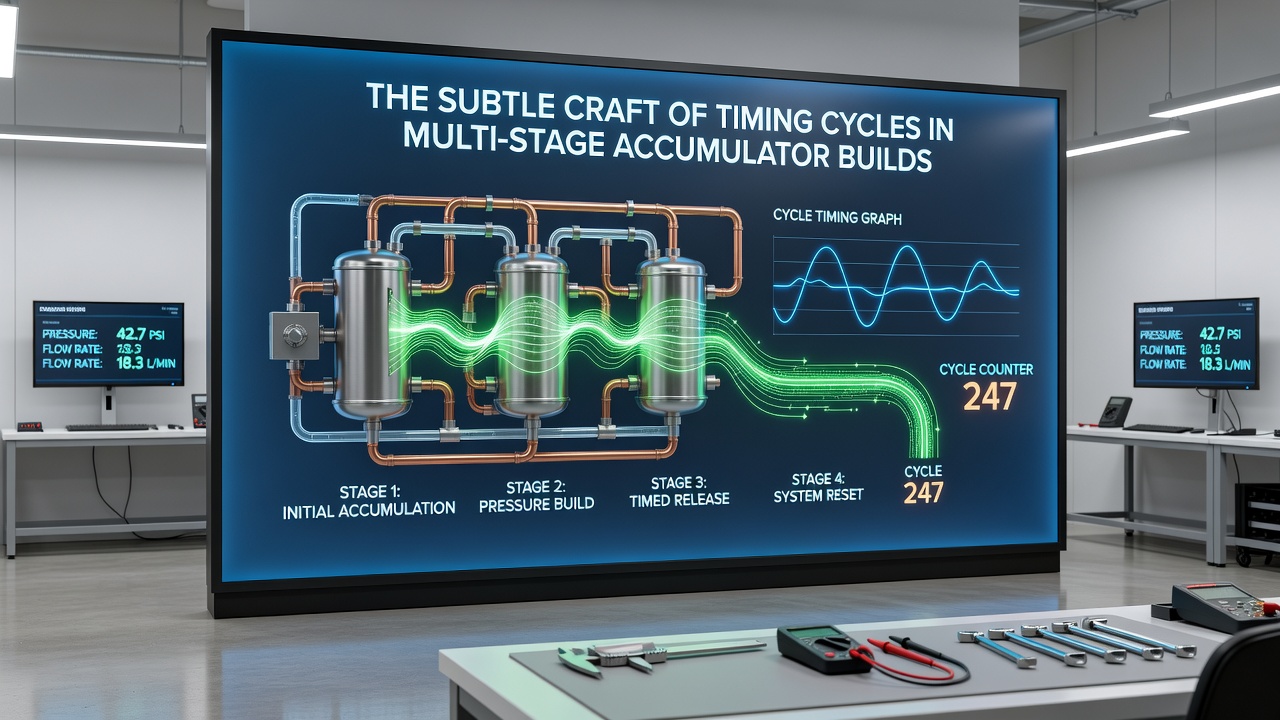
June 2026 figures from industry monitoring networks indicate a 12 percent rise in adoption of variable timing protocols across accumulator-equipped systems compared with the prior year, driven by updates in sensor technology and control software. Reports compiled by research bodies such as CSIRO track how facilities fine-tune discharge phases to match intermittent renewable inputs in hybrid power setups. These adjustments often involve extending the final stage dwell by fractions of a second to accommodate voltage variations without interrupting mechanical output.
Further analysis from academic partnerships reveals that timing offsets between stages correlate with reduced thermal buildup in accumulator shells, which extends service intervals in continuous-duty applications. Engineers apply Fourier transform techniques to vibration data collected during cycles, pinpointing frequencies that signal the need for recalibration before efficiency drops become noticeable. One documented installation in a Midwest processing plant achieved stable operation after shifting the second-stage trigger point by 180 milliseconds based on historical load curves.
Challenges in Scaling Multi-Stage Designs
Scaling these builds introduces variables such as fluid compressibility differences across temperature ranges and valve hysteresis that alter intended cycle lengths; regulatory filings submitted to Canadian authorities emphasize the need for documented verification of timing accuracy in safety-critical environments. Maintenance teams perform periodic bench testing of individual stages to confirm that cumulative delays do not exceed design thresholds, while simulation software models potential drift under extended operation. When multiple accumulator banks operate in parallel, synchronization protocols prevent overlapping charge events that could overload supply lines.
Technicians address these issues through phased commissioning procedures that start with single-stage validation before linking additional units, and field data collected in 2026 shows this approach shortens overall setup time by several days per project. Organizations maintain detailed cycle logs that feed into predictive maintenance models, allowing preemptive replacement of seals or valves before timing deviations affect throughput.
Conclusion
Timing cycles form the operational backbone of multi-stage accumulator builds, with documented performance gains tied to careful interval management across hydraulic and energy storage applications. Continued monitoring and data-driven refinements, as reflected in mid-2026 reports, support consistent system behavior under varying loads. Facilities that apply these principles report measurable improvements in component longevity and energy utilization, underscoring the technical value of precise cycle coordination in modern industrial designs.