Player Decision Trees When Navigating Bonus Features Across Multiple Reel Platforms

Player decision trees map the branching choices that arise when bonus features activate across different reel platforms, and these structures help organize selections based on payout probabilities, trigger conditions, and platform-specific rules. Research from industry analysts shows that slots operate on 3-reel, 5-reel, and 6-reel configurations, each presenting distinct pathways once free spins or multipliers engage. Data indicates that players encounter initial branches such as selecting between risk levels or feature variants, while subsequent nodes depend on symbols landed and remaining spins.
Reel Platform Variations Shape Initial Branches
Three-reel platforms typically limit bonus depth because fewer positions reduce symbol combinations, yet they often deliver straightforward multiplier choices that lead directly to fixed outcomes. Five-reel setups expand the tree with additional wild placements and scatter triggers, allowing players to evaluate whether to pursue progressive elements or lock in guaranteed wins. Observers note that six-reel platforms introduce extra rows or ways-to-win mechanics, which create wider decision spreads at each stage of a bonus round.
Studies from the Nevada Gaming Control Board track how these configurations affect session lengths, revealing that multi-reel systems generate more frequent branch points during bonus navigation. Players assess volatility indicators at the outset, then adjust paths according to accumulated credits and feature persistence rules that differ by provider networks.
Bonus Activation Points Create Core Nodes
Bonus entry points form the root of most decision trees, where scatter counts or special symbol alignments determine available options. Once inside, players face immediate selections such as choosing between high-volatility pick games or steady accumulation modes, and these choices propagate through remaining spins or levels. Evidence from multiple operator reports demonstrates that platforms with cascading reels add sequential decisions after each collapse, forcing reevaluation of multipliers before the next cascade occurs.
Platform transitions matter because a player moving between a classic three-reel title and a modern five-reel progressive must rebuild the tree structure mid-session. Rules for retriggering free spins vary, which alters whether early selections prioritize safety or expansion, while data shows that May 2026 releases continue to layer new modifier choices onto existing frameworks.
Decision Mapping Across Networked Reels
Operators connect multiple reel platforms through shared progressive pools, which means decisions made on one machine influence eligibility on others. Players construct trees that account for cross-platform transfer rules, such as carrying bonus credits or multipliers between devices. Research indicates that these connections require monitoring of contribution percentages and minimum bet thresholds that reset at each transfer point.
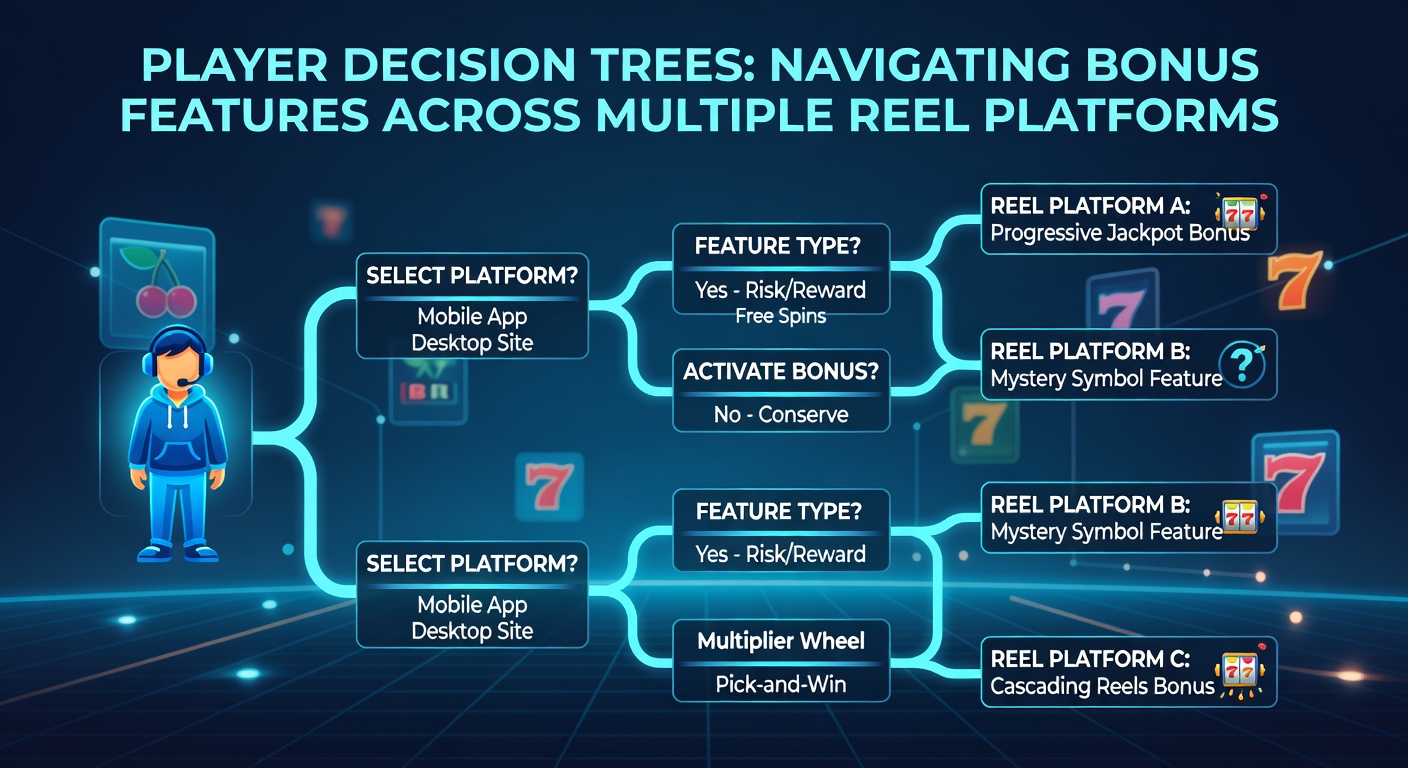
Networked environments add layers where jackpot qualification depends on prior choices, prompting players to weigh immediate bonus payouts against longer-term accumulation paths. Figures from the Australian Gambling Research Centre illustrate how participation rates shift when players recognize that early low-risk selections preserve access to higher-tier features later in the sequence.
Probability Assessment at Each Branch
Effective navigation relies on evaluating hit frequencies and payout distributions at every node. Players calculate expected values by comparing the likelihood of landing additional scatters against the cost of forgoing current multipliers, and platform software often displays these odds transparently. Those who study historical spin data discover patterns where certain reel setups favor conservative paths while others reward aggressive selections.
Turns out that retrigger mechanics serve as critical pivots because they reopen earlier branches with enhanced parameters. Data shows that platforms releasing updates in 2026 maintain consistent probability tables yet introduce variable entry costs that change the tree's optimal route calculations.
Conclusion
Player decision trees provide structured frameworks for handling the layered choices that emerge when bonus features span diverse reel platforms. Information from regulatory bodies and research institutions continues to document how these pathways evolve with new configurations, and players apply probability models to traverse them effectively. As reel networks expand, the ability to map and adapt these trees remains central to informed navigation across available titles.