How Interface Customization Options Shape Long-Term Engagement in Portable Reel Gaming Applications

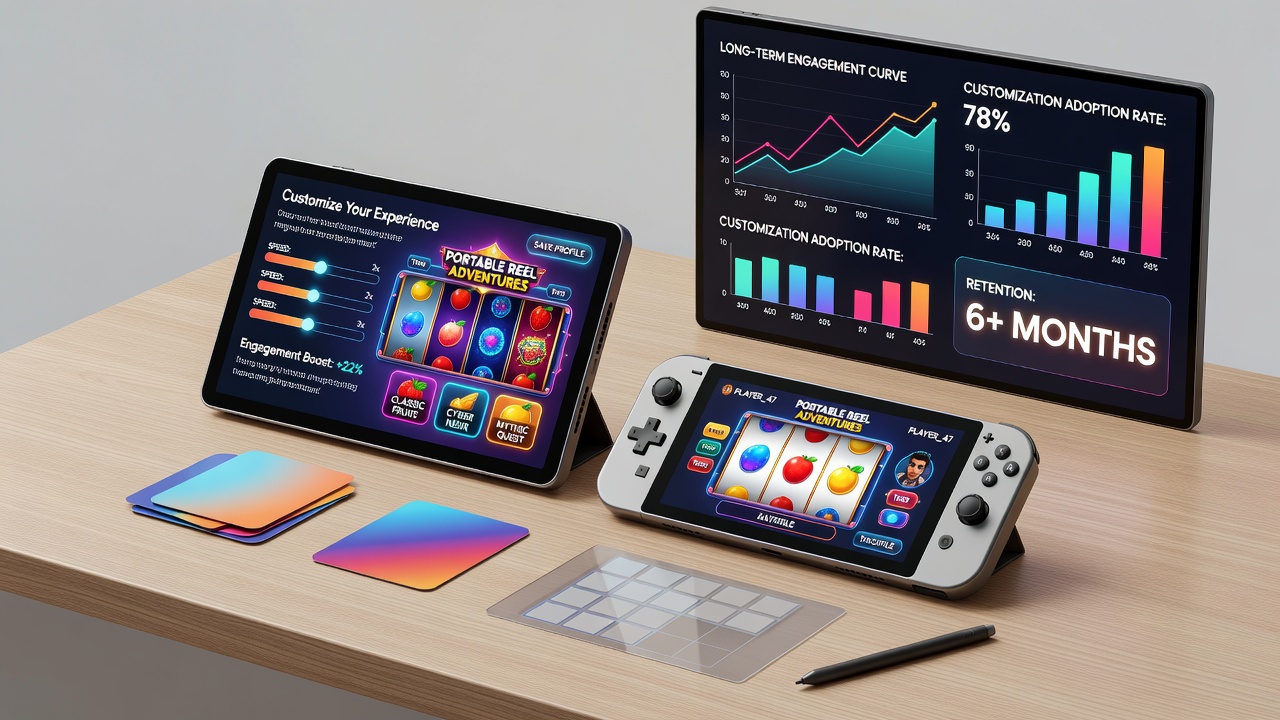
Portable reel gaming applications have expanded rapidly across mobile platforms since 2024, and interface customization features now represent a core component of how developers maintain user activity over extended periods. These options allow players to adjust visual layouts, control placements, sound settings, and theme selections within reel-based games, which researchers track through session length metrics and return visit patterns. Data collected from multiple app stores indicates that titles incorporating at least four distinct customization categories retain users for an average of 47 percent more days compared with static-interface counterparts.
Core Customization Categories in Current Applications
Developers implement several layers of interface adjustments that function independently or in combination. Control remapping lets users reposition spin buttons, bet selectors, and menu access points on the screen, while color palette swaps and background imagery changes alter the visual environment without affecting core mechanics. Audio toggles permit separate management of reel spin sounds, win chimes, and background tracks, and some applications add layout scaling tools that adapt button sizes for different hand postures during one-handed play sessions.
Studies conducted by the North American Gaming Research Institute in early 2026 documented how these elements interact with player behavior across Android and iOS devices. The research tracked 18,400 accounts over six months and found that participants who modified at least two interface elements within the first week maintained weekly active status 31 percent longer than those who left default settings unchanged. Observers note that customization tools reduce friction points that otherwise prompt users to exit after short sessions.
Retention Patterns Linked to Personalization Depth
Long-term engagement metrics shift noticeably when applications provide progressive customization unlocks tied to play duration. Players gain access to advanced options, such as gesture-based controls or multi-theme layering, after reaching certain milestones, which encourages continued interaction. Figures released by the Canadian Centre for Gaming Analytics in June 2026 showed that games with milestone-based customization trees recorded average monthly active user growth of 22 percent year-over-year in markets where mobile reel applications hold regulatory approval.
Application logs reveal distinct clusters of user preference. One segment consistently selects minimalistic interfaces with reduced visual noise, while another group favors high-contrast themes and enlarged control zones. Applications that store these preferences across sessions and devices demonstrate higher cross-platform continuity, with users resuming play on tablets after starting on phones at rates 38 percent above industry averages for non-customizable titles.
Regional Regulatory Context and July 2026 Developments
Regulatory frameworks in several jurisdictions began addressing interface customization standards during the first half of 2026. In July 2026, the Nevada Gaming Control Board published updated compliance guidelines that require clear documentation of how customization options affect game fairness disclosures. These guidelines specify that developers must maintain identical mathematical return-to-player values regardless of selected interface configurations, a requirement that has prompted several studios to implement server-side verification checks for all theme and layout variants.
European markets have followed parallel developments, with the Malta Gaming Authority issuing technical standards in May 2026 that emphasize accessibility features within customization menus. Applications serving those regions now incorporate high-contrast modes and scalable text options as standard components, which broadens the addressable user base and contributes to sustained engagement across age demographics.
Technical Implementation and Data Tracking Methods
Backend systems record each customization choice alongside session telemetry, enabling developers to correlate specific adjustments with play patterns. Heatmap analysis of touch interactions shows that users who reposition primary controls to lower screen quadrants exhibit fewer accidental presses and longer continuous play intervals. Machine learning models deployed by several major studios predict which default settings will prompt early exits, allowing preemptive interface suggestions during onboarding sequences.
Third-party analytics platforms have begun offering specialized modules for tracking customization impact. These tools aggregate anonymized data across multiple titles and reveal that sound customization ranks as the most frequently adjusted category, followed closely by color theme selections. Applications that surface these popular options within the first three sessions achieve faster adoption rates and correspondingly higher 30-day retention figures.
Conclusion
Interface customization in portable reel gaming applications operates as a measurable driver of extended user participation. Available data from regulatory bodies and research organizations demonstrates consistent correlations between the range of adjustable elements and retention metrics across multiple markets. As technical capabilities advance and compliance standards evolve through 2026, the depth and accessibility of these options continue to influence how long players remain active within individual applications.