How Artificial Intelligence Personalizes Free Spin Allocations Based on Historical Play Patterns in Digital Reel Entertainment
Data Collection and Pattern Recognition
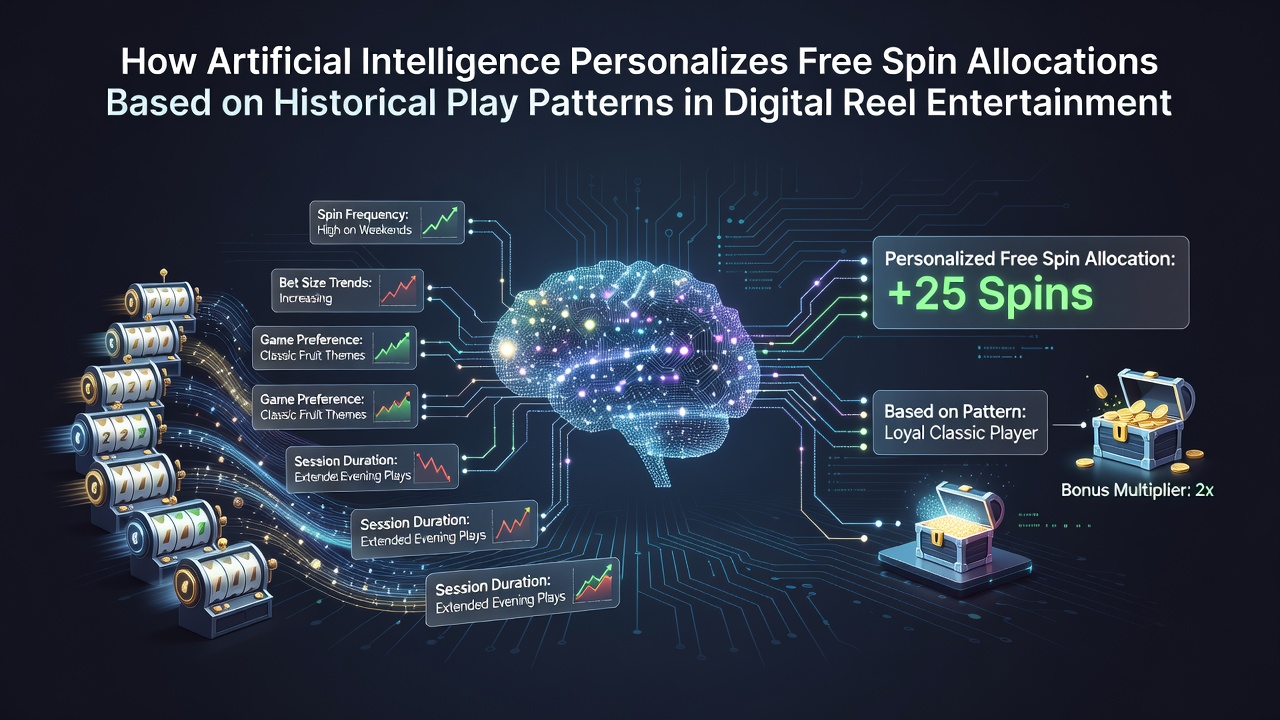
Artificial intelligence systems in digital reel entertainment gather extensive records of player activity including session duration, wager amounts, frequency of spins, and responses to various bonus triggers, then process these inputs through machine learning models that identify recurring behaviors across thousands of accounts. Researchers at institutions like the University of Nevada, Reno have documented how these algorithms detect clusters such as high-volume short sessions versus extended low-stake play, allowing platforms to segment users into categories that receive tailored free spin offers. Data shows that systems update profiles continuously, incorporating new interactions within minutes rather than waiting for batch processing cycles.
Operators integrate these models with real-time feeds from game servers, which means adjustments to free spin allocations can occur mid-session when patterns shift noticeably. For instance, a player who suddenly increases bet sizes after a streak of losses might trigger an algorithm to release a modest set of spins as retention support, while consistent winners see larger bundles timed to coincide with peak activity hours.
Algorithmic Allocation Mechanisms
Machine learning frameworks apply reinforcement learning techniques to optimize when and how many free spins to distribute, weighing historical conversion rates against current engagement metrics. Studies from the Canadian Institute for Gaming Research indicate that models trained on multi-year datasets achieve higher precision in predicting which users will extend play after receiving spins, compared with rule-based systems that rely on fixed thresholds. The process involves scoring each account on factors like loyalty tenure and volatility tolerance, then matching those scores to available promotional pools.
Platforms running these systems often maintain separate models for different regions, accounting for variations in player preferences observed in markets such as Australia and parts of Europe. In June 2026 several major networks reported expanded testing of cross-border data sharing protocols that let AI refine allocations further by pulling anonymized benchmarks from compliant jurisdictions.
Integration with Game Mechanics
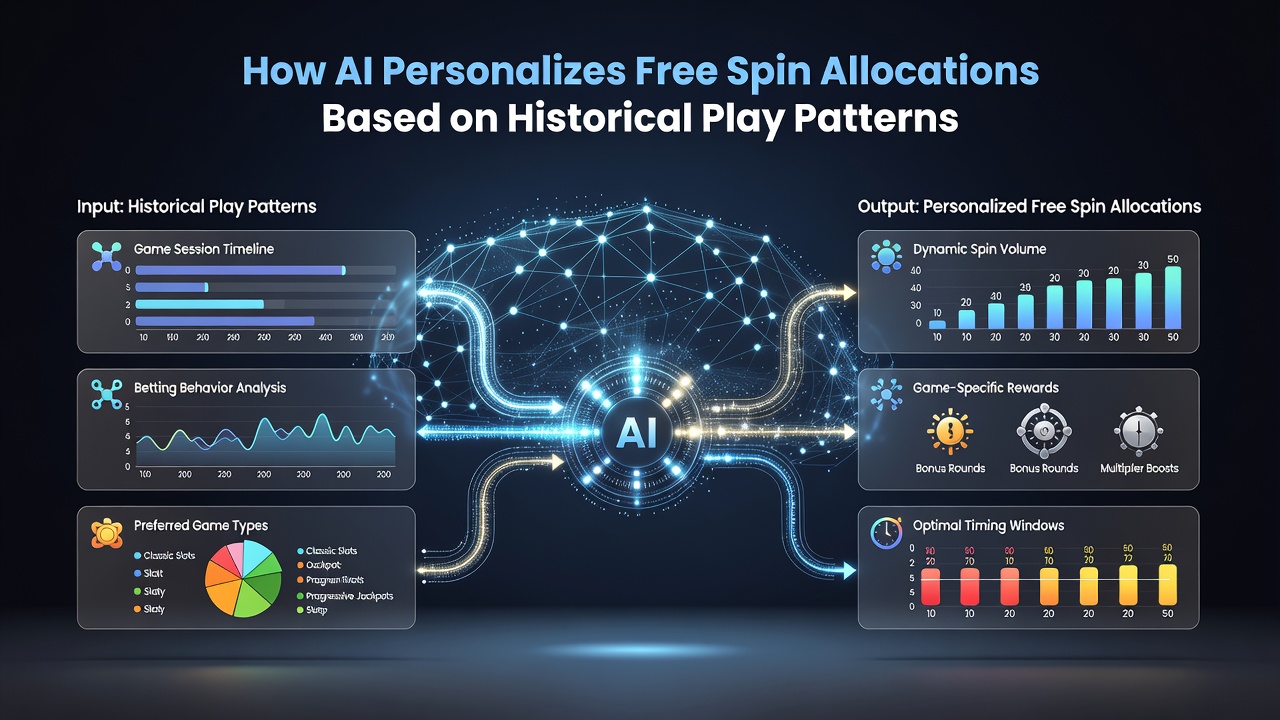
Free spin personalization ties directly into reel mathematics and bonus round structures, where AI adjusts not only quantity but also the timing of offers relative to feature frequency. Observers note that games with accumulator-style progressions receive allocations weighted toward players whose past data shows preference for building toward larger events, whereas standalone titles favor quicker, smaller distributions for those exhibiting rapid session turnover. This integration occurs through APIs that feed model outputs back into the game client without disrupting core random number generation.
Take one developer that deployed a hybrid model combining historical pattern analysis with live telemetry; the result allowed free spins to appear during natural lulls in play rather than at arbitrary intervals, which data from internal reports linked to sustained session lengths across tested titles.
Regulatory and Technical Considerations
Compliance frameworks in regulated markets require transparency around how player data informs promotional decisions, prompting operators to maintain audit logs of every allocation decision generated by AI components. The Nevada Gaming Control Board has published guidelines that address algorithmic fairness in bonus distribution, emphasizing documentation of model inputs and outputs. Similar expectations appear in frameworks from Australian state regulators, where emphasis falls on preventing unintended concentration of offers among narrow demographic slices.
Technical implementations rely on secure data pipelines that anonymize identifiers before feeding information into training sets, reducing exposure while preserving the statistical integrity needed for accurate predictions. Industry reports from the European Gaming and Betting Association highlight ongoing work to standardize these pipelines across suppliers so smaller studios can adopt similar personalization without building full infrastructure from scratch.
Future Developments Observed in Mid-2026
By June 2026, several networks had begun piloting generative models capable of simulating hypothetical play histories to stress-test allocation strategies before live deployment. These simulations draw from aggregated, anonymized datasets rather than individual records, enabling operators to evaluate edge cases such as sudden changes in regional player behavior following new game releases. Early figures reveal measurable improvements in retention metrics when these forward-looking models supplement existing historical analysis.
Collaboration between academic teams and platform engineers continues to explore ways to incorporate additional variables like device type and time-of-day patterns without increasing computational overhead. The result is a steadily evolving toolkit that keeps free spin offers aligned with documented user trajectories across diverse reel formats.
Conclusion
Artificial intelligence has established itself as the primary engine behind personalized free spin distribution in digital reel entertainment by continuously refining its understanding of historical play patterns. Through layered data analysis, adaptive algorithms, and region-specific tuning, these systems deliver offers that reflect documented behaviors rather than generic schedules. As platforms incorporate newer simulation techniques and maintain alignment with regulatory standards from multiple jurisdictions, the underlying processes are expected to grow more precise while remaining grounded in observable player data.