Exploring Regional Regulatory Impacts on Feature Frequency in Accumulator Prize Systems

Accumulator prize systems operate through progressive pools that build from player contributions across linked machines or platforms, and regional regulations directly shape how often associated features activate to contribute to those pools. Observers note that variations in legal frameworks across jurisdictions create measurable differences in feature trigger rates, with some areas imposing strict limits on bonus round frequencies while others allow more flexible parameters tied to overall return-to-player calculations.
Regulatory Structures in North American Markets
Data from state-level gaming authorities reveals that North American regions apply distinct approaches to feature frequency controls within accumulator setups. In jurisdictions like New Jersey and Pennsylvania, licensing requirements often tie bonus activation rates to certified mathematical models that must demonstrate balanced distribution across sessions, and operators submit quarterly reports showing how these features feed into accumulating jackpots without exceeding predefined volatility thresholds. Researchers at institutions tracking gaming compliance have documented how such rules result in adjusted trigger probabilities, typically ranging between 1 in 150 to 1 in 300 spins depending on the approved configuration for each title.
Canadian provinces follow a different pattern where provincial commissions mandate transparency on feature mechanics, requiring public disclosure of expected hit rates for any accumulator-linked bonuses. This leads to standardized testing protocols that verify feature frequencies align with approved payout percentages before deployment, and figures from recent compliance audits indicate consistent enforcement across multiple operators. Those who've studied cross-border operations observe that these requirements sometimes prompt developers to recalibrate reel algorithms to maintain compliance when expanding into new provincial markets.
European Variations and Compliance Patterns
Across European Union member states, accumulator prize regulations diverge significantly based on national interpretations of broader gaming directives, with some countries enforcing minimum intervals between feature activations to prevent excessive clustering. According to reports from the European Gaming and Betting Association, these policies influence how often symbols or bonus events contribute to shared prize pools, and data compiled from multiple operators shows feature frequencies reduced by up to 15 percent in stricter environments compared to more permissive ones. European Gaming and Betting Association reports highlight ongoing harmonization efforts that aim to standardize certain testing criteria while preserving regional flexibility.
Impact on Feature Algorithms
Developers respond to these regulatory environments by embedding region-specific parameters into their accumulator systems, adjusting the underlying random number generators to meet local frequency guidelines. Studies from academic research groups have examined how these modifications affect player engagement metrics, with evidence suggesting that lower feature rates in regulated markets correlate with steadier but less frequent contributions to prize accumulators. Observers tracking industry adaptations note that companies often maintain separate code branches for different territories to ensure ongoing compliance without disrupting global release schedules.
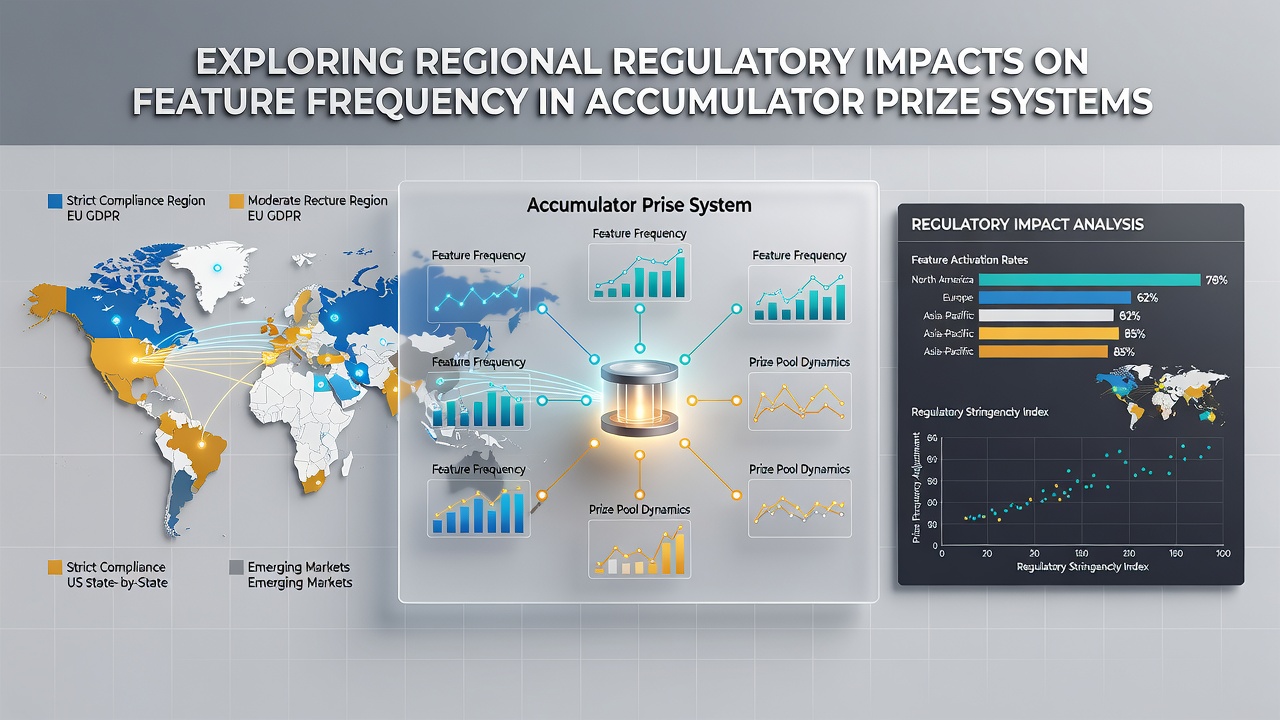
What's interesting is how these adjustments play out in practice, where a single accumulator network might exhibit different bonus trigger behaviors depending on the player's location. Regulatory filings from June 2026 onward are expected to incorporate enhanced reporting on these variations, building on existing frameworks that already require detailed logs of feature occurrences and their impact on prize pool growth. This evolving landscape encourages ongoing refinements to mathematical models that balance regulatory demands with operational efficiency.
Asia-Pacific and Australian Approaches
Australian state regulators apply rigorous approval processes for accumulator features, including mandatory simulations that project long-term frequency distributions before any system goes live. These evaluations often result in capped activation rates for certain bonus types to align with responsible gaming objectives, and industry data indicates that approved configurations typically show feature frequencies calibrated to specific percentages of total game cycles. Similar patterns emerge in parts of Asia where government oversight bodies enforce strict mathematical certifications, leading to standardized intervals between accumulator contributions.
Those monitoring these markets report that operators frequently conduct pre-launch audits with local authorities to verify compliance, which can extend development timelines but ensures feature mechanics remain within approved bounds. Research indicates that such oversight produces more predictable prize accumulation patterns across sessions, with variations between regions reflecting differences in how regulators prioritize player protection versus commercial flexibility.
Conclusion
Regional regulatory frameworks continue to shape feature frequency in accumulator prize systems through targeted requirements on trigger rates, testing protocols, and reporting standards. Evidence from multiple jurisdictions demonstrates that these rules produce distinct operational outcomes while maintaining the core function of progressive prize building. As markets evolve, particularly with updates anticipated around June 2026, operators and developers maintain focus on adapting algorithms to satisfy diverse compliance landscapes across global territories.