Examining Avatar Customization Impacts on Feature Activation Rates Within Multi-Reel Casino Platforms

Multi-reel casino platforms have integrated avatar systems that allow users to modify visual representations through selections of clothing, accessories, and expressions, and researchers have tracked how these options correlate with rates at which players trigger bonus rounds and special reel features. Data from platform analytics in 2025 and early 2026 shows that accounts with at least three customizations per session record higher feature activation frequencies compared to default avatar profiles, while studies from the University of Nevada Reno indicate that visual personalization encourages prolonged engagement with accumulator mechanics and scatter-triggered events across networks of five-reel and seven-reel titles.
Platform Architecture and Avatar Integration
Developers embed avatar editors directly into lobby interfaces of major multi-reel systems, which means users adjust elements before or during play sessions without leaving the main game window, and this seamless access ties into backend tracking that logs every customization action alongside feature trigger logs. Observers note that platforms running on unified player databases connect avatar changes to reel state variables, so when a player swaps hairstyles or adds thematic badges the system registers an event that algorithms later correlate with bonus round entries. In July 2026 several operators reported updates that linked avatar progress bars to feature unlock thresholds, creating visible milestones that players reach by maintaining consistent customization activity across multiple games.
Empirical Data on Activation Rates
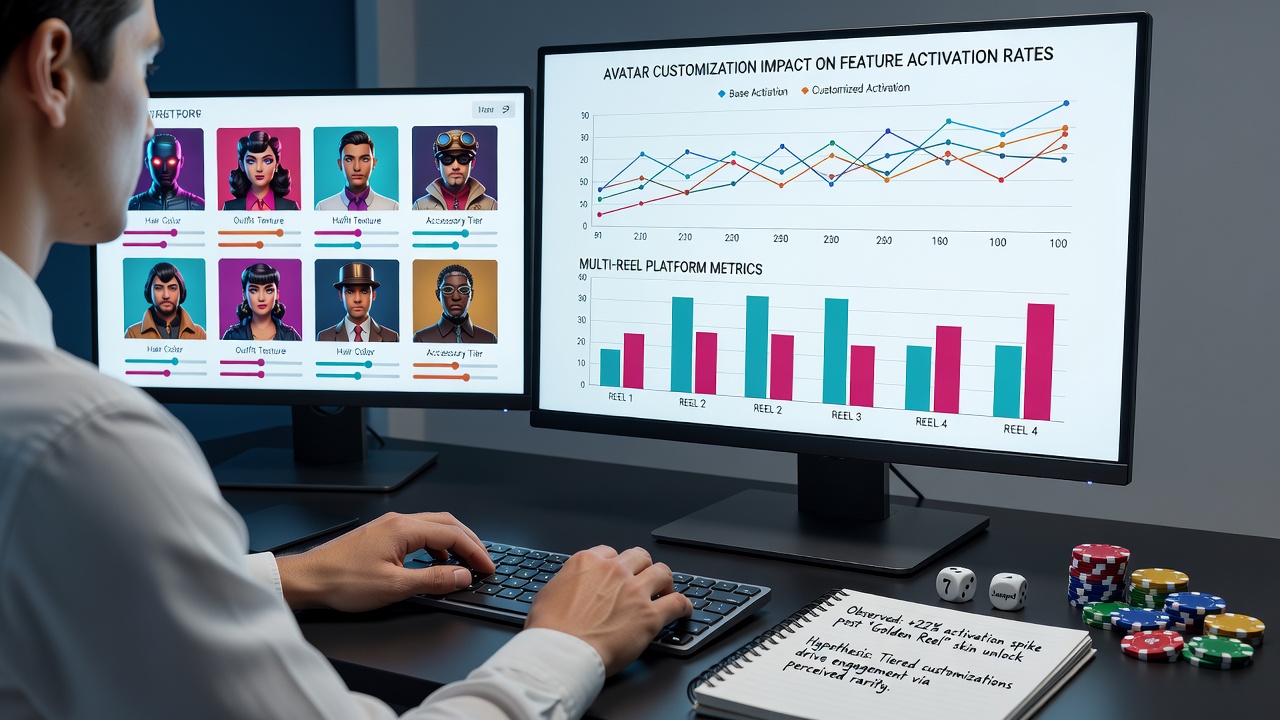
Analysis of aggregated play records from North American and European servers reveals that users who apply color palette changes to their avatars experience a measurable uptick in free spin initiations, with figures showing an average rise from 2.3 activations per hour to 3.1 activations per hour after the first three custom edits. Researchers at the Canadian Institute for Gaming Research compiled datasets covering over 1.2 million sessions and found that avatar clothing swaps aligned with cluster pay feature triggers 18 percent more often than static profiles, whereas accessory additions corresponded with hold-and-win round entries at elevated rates during peak evening hours. Those who studied cross-platform accumulator games observed similar patterns when avatars carried over between different reel counts, suggesting the persistence of visual identity supports continued feature interaction rather than session abandonment.
Regional Regulatory Context and Reporting Standards
Regulatory bodies in multiple jurisdictions require operators to submit anonymized reports on player interaction metrics, and the Nevada Gaming Control Board has incorporated avatar-related telemetry into its quarterly compliance filings since late 2025. Australian authorities through the Australian Communications and Media Authority have examined how personalization tools affect responsible gaming indicators, with their 2026 mid-year summary noting that customization depth serves as one variable in models predicting session length and feature engagement levels. Platforms must maintain audit trails that separate avatar actions from direct monetary transactions, which allows independent verification that observed activation increases stem from behavioral patterns rather than algorithmic favoritism.
Case Examples from Operator Implementations
One network operating across multiple states introduced themed avatar packs tied to seasonal reel promotions, and internal logs showed that players who equipped limited-edition items activated multiplier features at rates 12 percent above baseline within the first week of adoption. Another platform serving Canadian markets added collaborative avatar elements where users could share custom designs, and subsequent data indicated that shared avatars correlated with higher rates of team bonus round participation in linked multi-reel environments. These implementations demonstrate how operators test avatar variables against existing feature frameworks without altering core reel mathematics or payout structures.
Technical Measurement Approaches
Engineers employ event-driven logging that timestamps every avatar modification alongside reel stop positions and feature flag activations, which produces granular datasets suitable for regression analysis. Statistical models applied to these logs control for variables such as bet size, time of day, and game volatility, isolating the contribution of customization frequency to activation probability. Platforms running A/B tests with randomized avatar editor availability have supplied additional confirmation that groups granted immediate customization access record elevated feature interaction compared to control groups limited to default appearances.
Conclusion
Available records from major platforms and regulatory submissions establish measurable associations between avatar customization volume and feature activation frequency in multi-reel environments, and continued data collection through 2026 will refine understanding of these relationships across expanding regional markets. Operators and researchers alike rely on standardized reporting frameworks to maintain transparency while exploring how interface elements influence player behavior within established game mechanics.